Field note
Food Packaging Materials Malaysia: How F&B SMEs Can Compare Options
Choosing food packaging materials Malaysia businesses can rely on requires more than comparing paper, plastic, aluminium and glass. Malaysian F&B SME owners,...
Published 15/07/2026
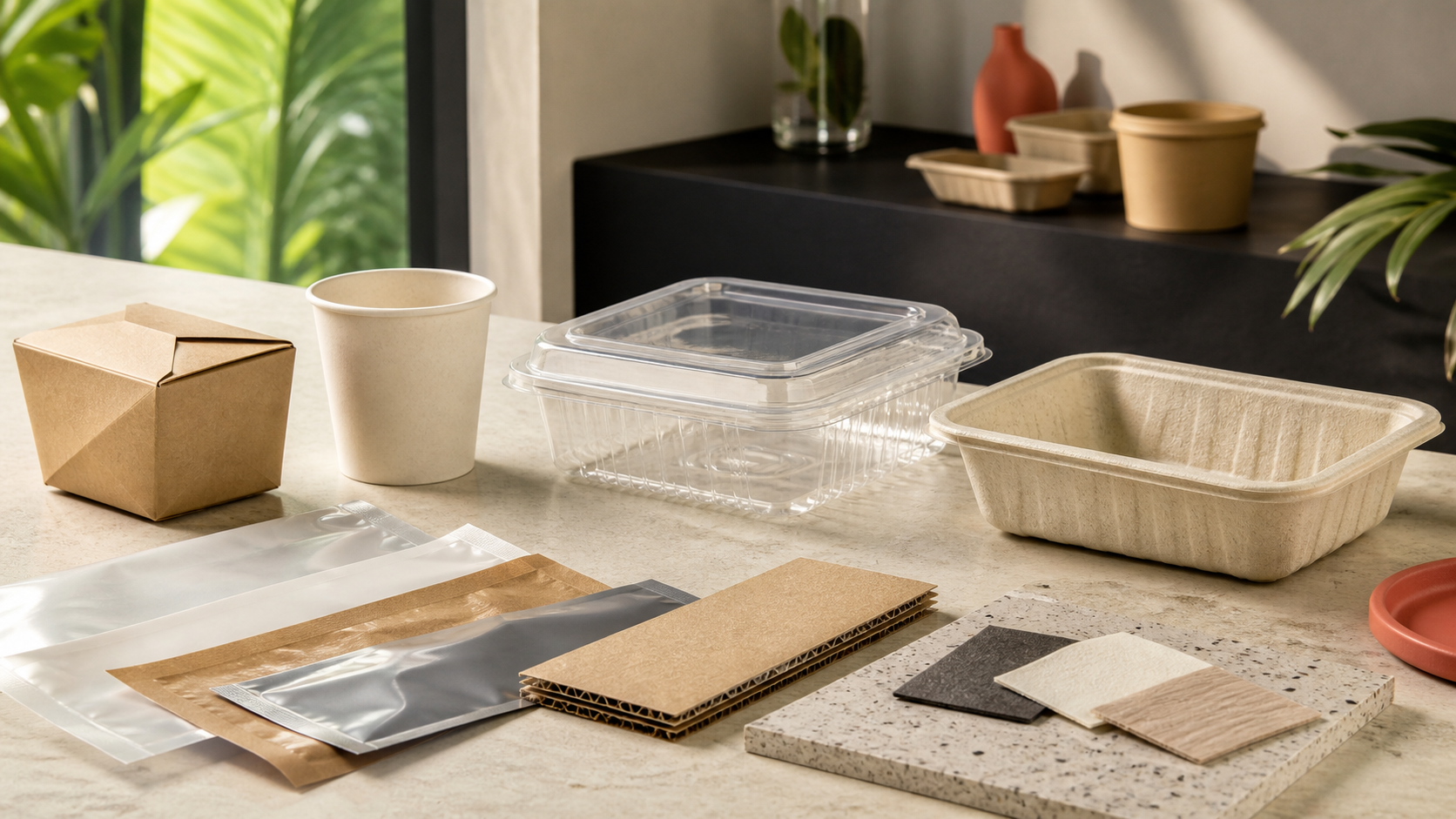
One leaking delivery can erase the savings from an entire carton of cheaper containers. For Malaysian F&B SMEs, the wrong packaging material can turn a routine order into wasted food, refunds and lost trust.
Choosing food packaging materials Malaysia businesses can rely on therefore requires more than comparing paper, plastic, aluminium and glass. Malaysian F&B SME owners, procurement teams and packaging buyers need a format that protects the food, survives handling and transport, fits the packing process, and has a credible route after use.
A package that looks sustainable but leaks, softens or shortens shelf life can create more waste than it prevents. Instead of asking which material is best, identify which option creates the lowest total risk for the product and its delivery system.
Key point: Compare food packaging materials Malaysia buyers are considering in this order: food safety, product protection, operational fit, transport performance, realistic recovery and brand presentation. Reject an option that fails a critical requirement, even if its unit price, appearance or environmental claim seems attractive.
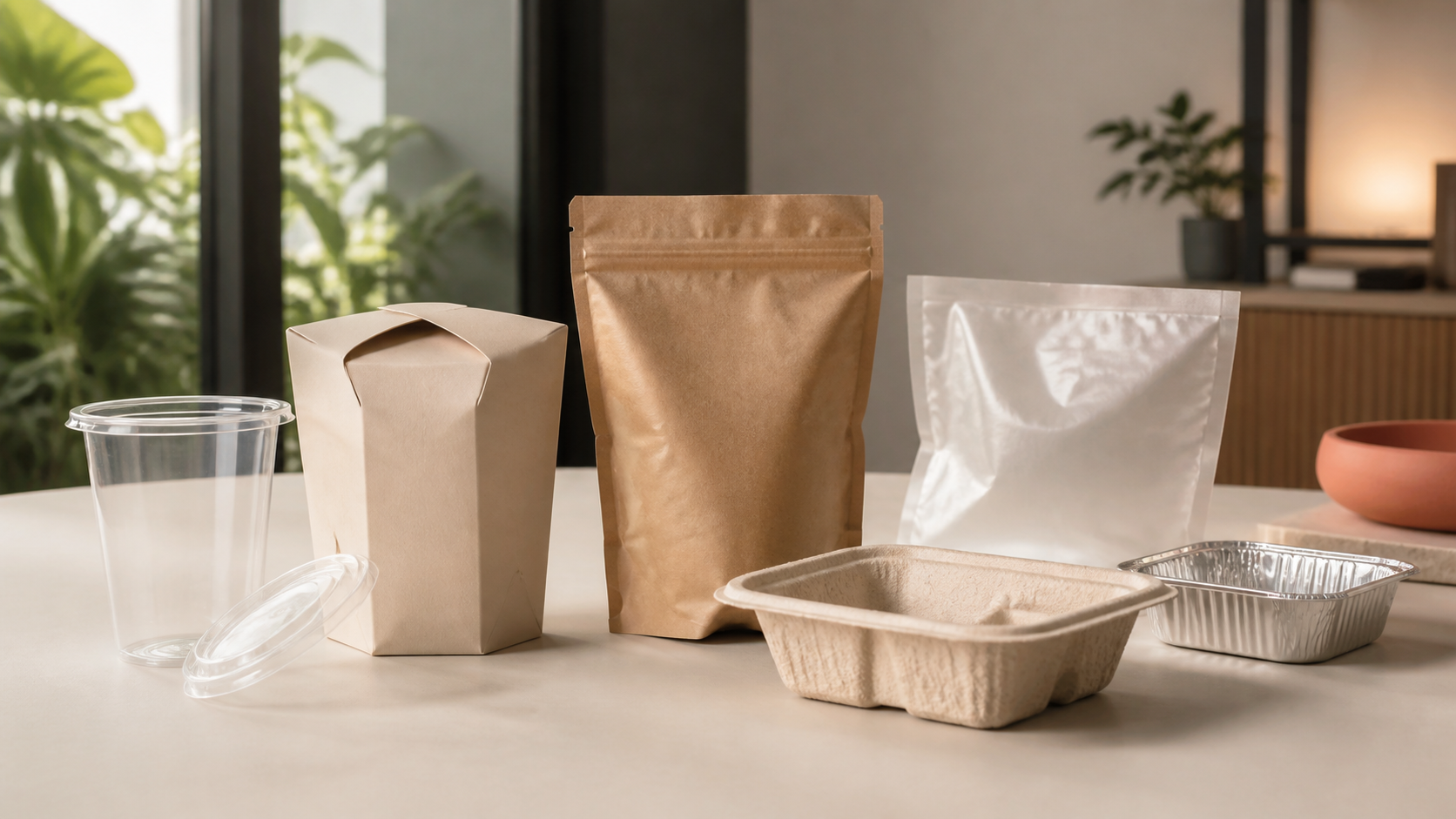
Start With What The Package Must Prevent
Food packaging has several jobs. It may need to contain liquid, block oxygen or moisture, limit light exposure, retain aroma, resist grease, prevent crushing, reveal tampering or support chilled and frozen storage. A material that performs well in one role may be poor in another.
List the failures that would make the product unsafe, unsellable or disappointing. For a sambal producer, seal integrity and oil resistance may be critical. For a bakery sending delicate pastries across the Klang Valley, crushing, movement and humidity may present the larger risks.
Malaysia's climate makes this product-first approach particularly important. Heat and humidity can affect paper stiffness, adhesive performance, condensation and the way consumers store food after purchase. Assess the package under realistic conditions, not only in an air-conditioned sample room.
The lightest package is not the lowest-waste package if it causes more food to be discarded.
In 2022, an estimated 1.05 billion tonnes of food waste were generated at retail, food-service and household level worldwide. This was equivalent to about 19% of the food available to consumers. Packaging waste matters, but discarded food also carries the resources used to grow, process, chill, transport and prepare it. Material selection should consider both forms of waste.
Use Five Gates Before Comparing Appearance Or Price
A weighted score can help, but apply five pass-or-fail gates first. This stops an attractive average score from concealing a serious weakness.
- Food-contact suitability: Is the complete package suitable for the food, temperature, contact time and intended use?
- Protection: Does it provide the necessary barrier, seal strength and physical protection for the target shelf life?
- Operational fit: Can staff fill, seal, label, store and inspect it consistently with the available equipment and workspace?
- Distribution fit: Can it tolerate stacking, vibration, rider handling, condensation and the actual chilled, frozen or ambient route?
- End-of-use credibility: Is there a practical reuse, collection, recycling or other recovery route where the package will be discarded?
If a material fails a critical gate, remove it from the shortlist or redesign the format. Premium finishes, low material weight and broad environmental labels cannot compensate for a food-safety or leakage risk.
How The Main Material Families Compare
| Material family | Where it can perform well | Questions to investigate | Recovery reality to verify |
|---|---|---|---|
| Paper and paperboard | Dry foods, sleeves, cartons, secondary packs and formats where print quality and structural presentation matter. | Will humidity, grease or condensation weaken it? Does it need a coating, liner or separate inner pack? | Clean fibre is generally simpler to sort than food-soiled or heavily coated fibre. Ask whether liners, windows and coatings can be separated. |
| Rigid plastic | Lightweight tubs, bottles, trays and closures requiring moisture resistance, visibility or impact tolerance. | Which polymer is used? Can the container tolerate filling temperature, reheating, freezing and repeated opening? | Technical recyclability does not guarantee local collection. Confirm the resin, colour, label, sleeve and food-residue requirements with actual collectors. |
| Flexible film and pouches | Products needing low packaging weight, efficient storage or strong moisture, oxygen and aroma barriers. | Is the structure mono-material or a laminate? Can staff produce a dependable seal around powders, crumbs, oil or sauce? | Small and multilayer flexibles can be difficult to collect and recycle in practice. Do not describe them as recyclable without a verified route. |
| Aluminium | Trays, cans, lids and barrier layers where resistance to light, gases or moisture is important. | Will acidic or salty food require a suitable internal coating? Can thin trays resist denting and lid deformation? | Clean, separable aluminium may have recovery value. Laminated foil and formats with heavy food residue present different challenges. |
| Glass | Jars and bottles where product visibility, chemical inertness and a substantial premium feel are priorities. | Can the distribution system tolerate the weight and breakage risk? Are the closure and tamper-evidence systems dependable? | Check local collection and account for caps, pumps, labels and residual food. Reuse requires a controlled return, inspection and washing system. |
| Moulded fibre and bio-based formats | Some dry, short-contact or takeaway applications where stiffness and fibre texture support the product experience. | What provides resistance to oil, water and heat? Is the material suitable for the food and disposal conditions claimed? | Bio-based, biodegradable and compostable describe different attributes. Ask which facility or controlled system will receive the used pack. |
There is no universal winner. Material family alone tells buyers too little. A clear mono-material tub, a dark tub with a full-body sleeve and a laminated pouch can have very different sorting prospects, even when all three are described as plastic packaging.
A Paper Appearance Can Conceal A Complex Structure
Paper and paperboard often communicate warmth, craft and natural texture. That premium perception can be valuable for bakery, confectionery, gifting and speciality-food brands. It does not automatically mean the complete package is easy to recover.
Cellulose fibres have limited resistance to water, oil and grease. Food applications may therefore use coatings, laminations, liners, adhesives or windows. These additions can provide necessary protection, but they also change how the finished pack behaves during sorting and fibre recovery.
Ask for the full material construction instead of accepting paper box as the specification. A useful answer identifies the board, food-contact layer, coating, adhesive, window and any separate insert. It should also explain which components a consumer must remove.
Barrier Performance And Recyclability May Conflict
Materials are often combined because each contributes a useful property. One layer may provide stiffness, another may seal, and another may block oxygen, moisture or light. The combination can protect sensitive foods while making the package difficult to separate after use.
This tension is clear in flexible pouches and sachets. They can use little material and provide strong product protection. Their small size, food contamination and multilayer construction can still make practical recovery difficult.
Test any change to a simpler structure. Moving from a high-barrier laminate to a mono-material film may improve its design-for-recycling potential, but only if the new pack still meets the required shelf life and local collection conditions. A change that causes flavour loss, oxidation, seal failure or more returns has merely shifted the problem.
Premium Perception Depends On Control, Not Decoration
Premium packaging is often associated with heavy board, glass, metallic effects, soft-touch finishes or elaborate structures. For an SME, those choices can increase packing time, transport weight, component count and the risk of visible damage.
A restrained pack can feel premium when its proportions are considered, the closure works cleanly, print is legible and the food arrives intact. A decorative sleeve over a leaking tub communicates poor control, regardless of its finish.
Evaluate each finish as part of the complete system:
- Does a dark colour, metallic layer or full-body sleeve affect sorting?
- Will condensation mark an uncoated surface?
- Can hot food distort the container or cause labels to lift?
- Does a textured finish remain clean during packing and delivery?
- Can consumers read storage, allergen and reheating instructions easily?
The chosen finish should support the intended product position without compromising handling, information or recovery.
National Recycling Context Does Not Predict Package Recovery
A national recycling figure does not show whether a particular food package will be collected and processed. Actual recovery varies with location, collection arrangements, material value, format, size, colour, contamination and the ability to separate components.
Malaysia does not operate one identical source-separation system in every jurisdiction. SWCorp states that the relevant source-separation rules apply in the states and federal territories that have adopted Act 672. Buyers should therefore check the arrangements at the likely place of disposal.
Identify who could receive the used package and ask what condition they accept. If no realistic route exists, state that limitation plainly. A technically recyclable material is not recycled in practice when nobody collects or processes it.
Food-contact Documents Must Match The Intended Use
Malaysia's food rules prohibit packaging that releases or may release poisonous, harmful or deteriorative substances into food. A general statement that a material is food grade does not provide enough information for a careful purchasing decision.
Request documentation that matches the application. Relevant details include the food type, whether it is oily or acidic, maximum filling temperature, heating or reheating conditions, contact duration, chilled or frozen storage, and whether the container is intended for one use or repeated use.
Assess the complete package. Inks, coatings, adhesives, liners, closures and recycled-content layers can have different functions and contact conditions. If the application is unusual or the evidence is unclear, seek advice from a qualified food-safety or packaging specialist before launch.
A Production-like Trial Is More Useful Than A Polished Sample
An empty showroom sample proves that a package can look good. It does not prove that the pack works with the food, staff and delivery route.
Run a small trial under production-like conditions:
- Fill the pack with the real product at the intended temperature and portion weight.
- Seal it using the actual equipment, settings and operator process.
- Store samples in the intended orientation under ambient, chilled or frozen conditions as applicable.
- Stack them at the expected transport height and place them in the real secondary carton or delivery bag.
- Reproduce a representative journey, including vibration, rider handling and time outside controlled storage.
- Inspect for leaks, deformation, condensation, staining, odour transfer, label lift and loss of appearance.
- Open the package as a customer would and record the food condition, serving experience and disposal instructions.
Keep one repeatable check. For example, ten filled packs stored for the target period and transported on the normal route must show zero seal failures and remain within the business's documented food-quality limits. This acceptance test can reveal regressions when a film, closure, adhesive or packing setting changes.
Build A Scorecard Around Total Commercial Risk
After removing unsuitable options, score the remaining candidates. The following weighting is an illustrative starting point, not a universal formula:
| Decision area | Illustrative weight | Evidence to compare |
|---|---|---|
| Food protection and safety | 35% | Compatibility documentation, seal trials, shelf-life evidence and failure rate. |
| Operations and handling | 25% | Filling speed, storage space, staff steps, equipment fit and quality-control needs. |
| Transport performance | 15% | Stacking, vibration, leakage, breakage and temperature-route trials. |
| Recovery and material efficiency | 15% | Material weight, component count, local acceptance and separation requirements. |
| Customer and brand experience | 10% | Opening, reclosing, portion use, legibility, appearance and disposal clarity. |
Adjust the weights to match the product. A fragile chilled dessert may need greater emphasis on transport stability. An ambient snack with a long target shelf life may give moisture and oxygen barriers more weight.
Score cost as the total packed-product cost, not only the container price. Include closures, labels, liners, secondary cartons, storage space, packing labour, damaged units, returns and food losses. This reveals whether an apparently inexpensive format shifts expense into operations.
Questions To Ask Before Approving A Material
- What is the complete material structure, including coatings, liners, labels and adhesives?
- Which food types, temperatures and contact durations does the supporting documentation cover?
- What shelf-life or barrier evidence is available for a comparable application?
- Which failure is most likely during filling, storage or delivery?
- Can components be removed without tools or unrealistic consumer effort?
- Who locally accepts the used package, and in what condition?
- What environmental claim can be supported without omitting important conditions?
- What changes must trigger a repeat of the pack test?
Record the answers in the purchasing specification. Verbal assurances are difficult to investigate when a seal, coating or material construction changes later.
Common Questions From Malaysian F&B Packaging Buyers
Is Paper Always Better Than Plastic?
No. Paper can work well for many applications, especially when it remains clean and free from complex barrier layers. Wet, greasy or long-shelf-life foods may require coatings or liners, so assess the complete construction and its local recovery route.
Does A Recycling Symbol Mean The Package Will Be Recycled?
No. A symbol may identify a material, but practical recovery depends on collection, sorting, contamination and market demand. Confirm acceptance with the relevant local collector or waste-service arrangement before making a claim.
Should An SME Choose Compostable Takeaway Packaging?
Only after checking food-contact suitability, performance and the intended disposal system. Compostable packaging usually requires specified treatment conditions. The claim is not a substitute for access to a suitable collection and treatment route.
Are Glass Jars Automatically More Premium And Sustainable?
No. Glass can provide clarity, product stability and a substantial feel, but it is heavier and breakable. Its suitability depends on the product, transport distance, closure system, recovery route and whether a controlled reuse model is workable.
How Many Packaging Options Should Be Tested?
For an initial SME comparison, two or three credible candidates are usually more informative than a large collection of loosely specified samples. Test them against the same product brief, route and acceptance criteria.
When Should Packaging Be Tested Again?
Repeat relevant tests when the material structure, gauge, coating, closure, adhesive, filling temperature, portion size, sealing setting, product formulation or distribution route changes. A visually similar replacement is not necessarily functionally identical.
Prepare One Product Brief Before Requesting Samples
Create a one-page brief for one product. Define the food, contact conditions, target shelf life, filling process, transport route, most expensive failure and likely disposal location. Then compare no more than three food packaging materials Malaysia options using the five gates and the same physical trial.
For more buyer-first guidance on packaging materials and finishes, visit BoxMany. Record the result as a documented packaging decision, not a vote for one material family.
References
- United Nations Environment Programme: Food Waste Index Report 2024
- Food and Agriculture Organization: Reduce, Reuse, Recycle, A Mantra for Food Packaging
- Ministry of Health Malaysia: Food Regulations 1985
- Ministry of Health Malaysia: Food-Packaging Provisions and Microplastics Information
- SWCorp Malaysia: Separation of Solid Waste at Source
- Ellen MacArthur Foundation: Flexible Packaging Overview
- npj Science of Food: Fluorinated Compounds in Paper and Paperboard-Based Food Packaging Materials