Packaging materials, clearly compared
Compare the material families behind common packs, then weigh protection, appearance, printability, moisture exposure, cost direction and end-of-life context for your product.
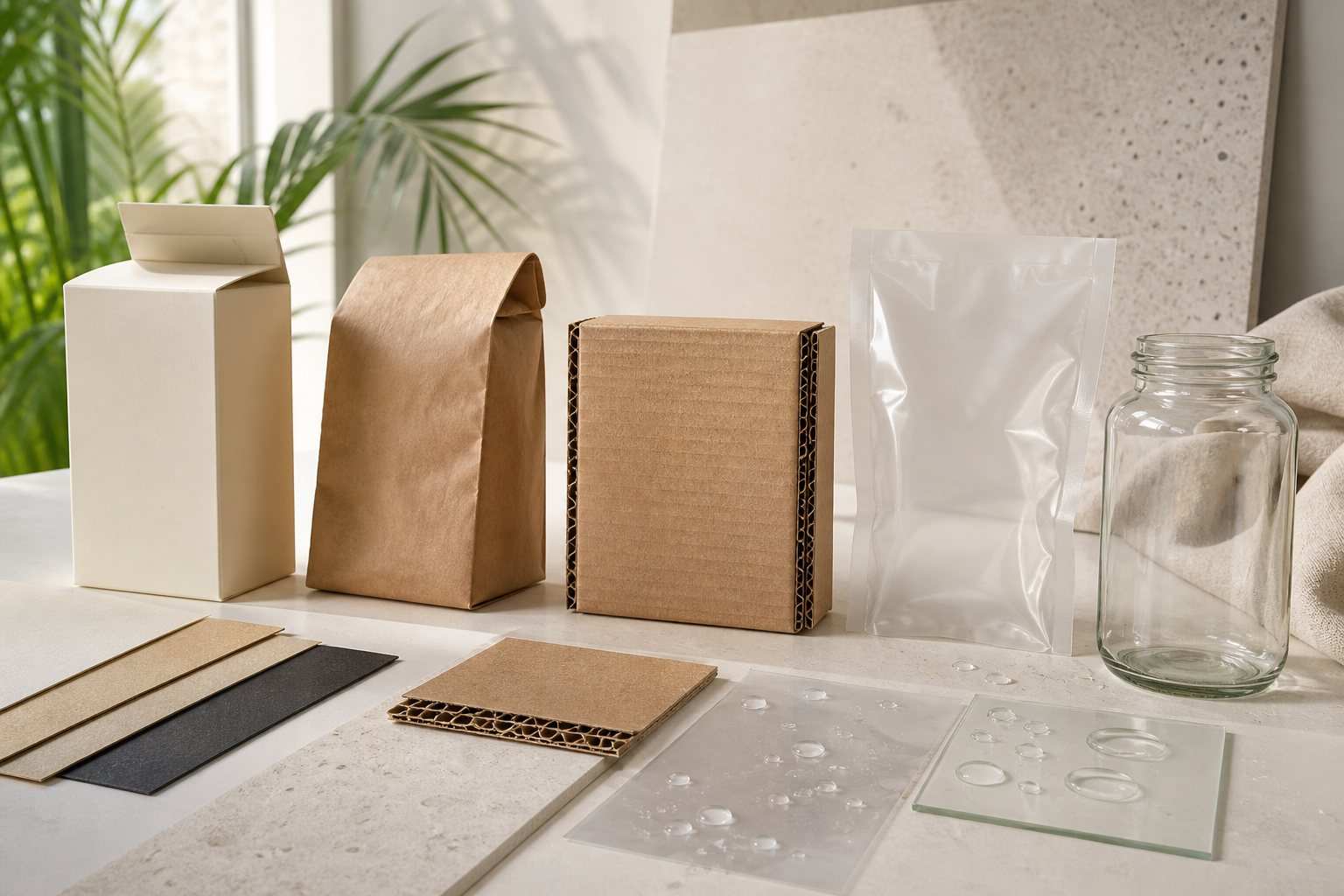
Eight material families to understand first
Each family can perform very differently by grade, structure and converting method.

-
Paper & paperboard
Printable sheets used for folding cartons, sleeves, labels and inserts; grade and caliper shape stiffness and finish.
-
Kraft
A visibly fibrous paper family whose natural variation affects colour consistency and fine-detail printing.
-
Corrugated board
Fluted board used where stacking and transit protection matter; flute profile affects print and pack volume.
-
Rigid board
Dense board used for structured presentation packs, with added weight, assembly and storage implications.
-
Plastics
A broad family with varied clarity, stiffness and barrier performance; resin and local recovery context matter.
-
Glass
A clear, inert and weighty format that needs careful impact, closure and transport review.
-
Flexible packaging
Films and laminates create lightweight adaptable formats, while barrier needs and recovery options require scrutiny.
-
Fibre / emerging materials
Moulded fibre and newer fibre systems need product-specific checks for strength, moisture, converting and supply consistency.
The questions that shape a material choice
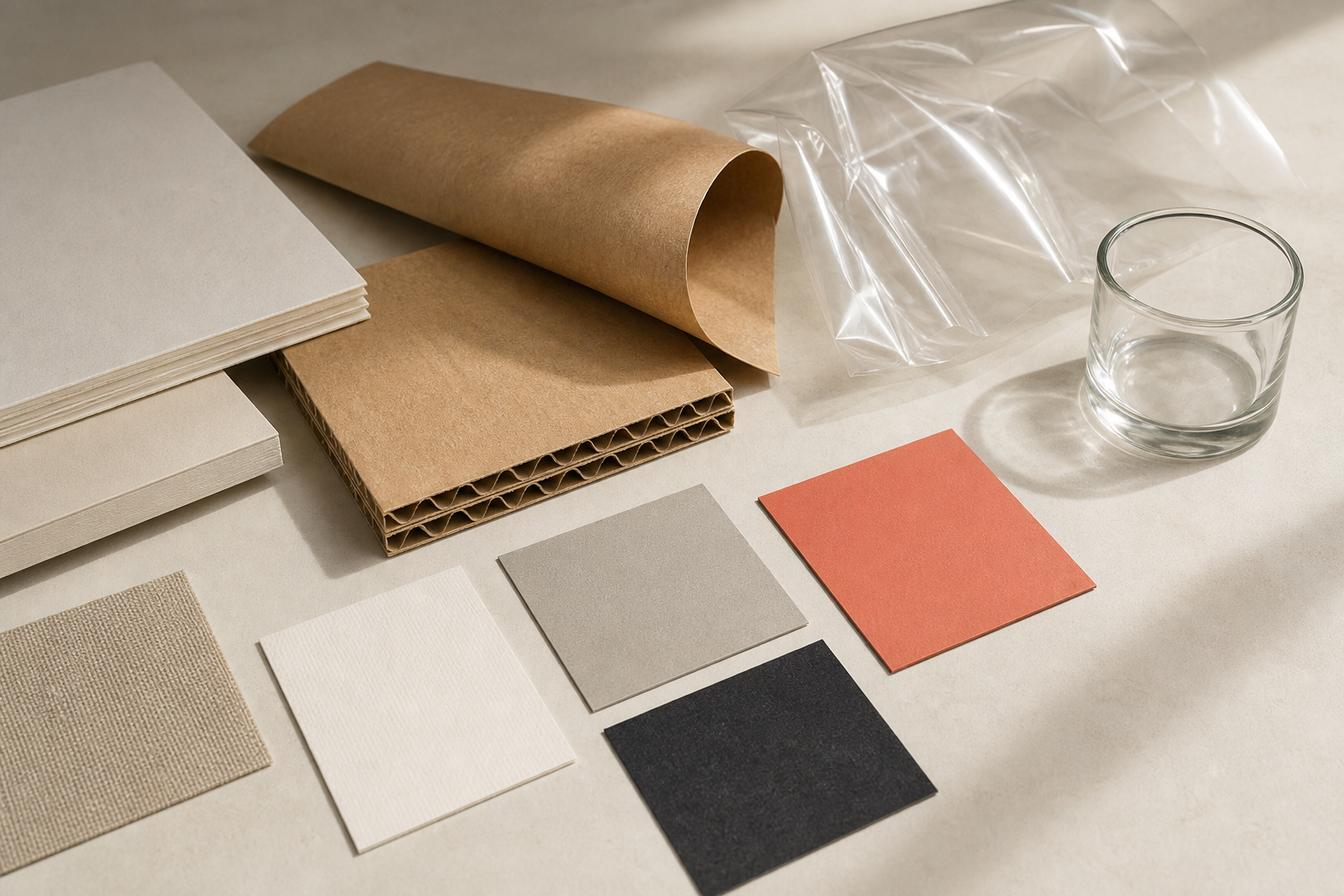
Use the same decision dimensions for every shortlisted material.
-
Typical use
Where the format is commonly used and where that context differs from your product.
-
Strength / protection
Compression, impact, puncture and containment needs across handling and transport.
-
Appearance
Surface character, colour, clarity and the visual signals the material creates.
-
Printability
Ink, coating, registration and fine-detail limits on the chosen grade or structure.
-
Moisture considerations
How humidity, condensation, liquids or storage conditions may alter performance.
-
Cost tendency
Likely material, tooling, converting, assembly and freight direction—not an unsupported quote.
-
Sustainability considerations
Material efficiency, recycled content and realistic local collection or recovery context.
-
Key limitations
The conditions that require samples, supplier data or product-specific testing.
A practical material review
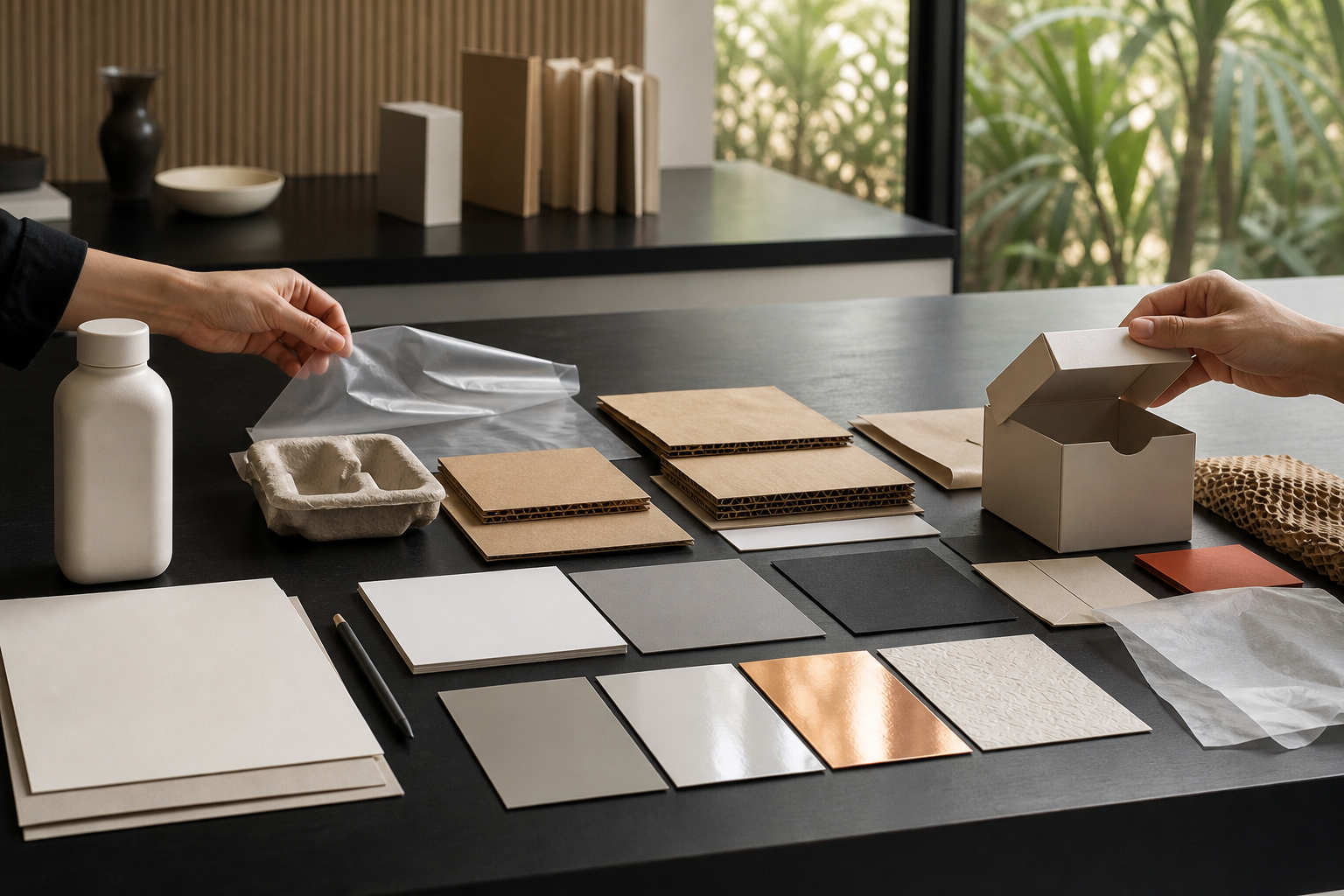
Move from product needs to samples without treating a material label as proof.
-
01
Define the product and protection need
Document weight, dimensions, fragility, exposure, shelf life and handling conditions.
-
02
Compare viable formats
Shortlist structures that can protect the product and fit the intended packing process.
-
03
Check print and moisture conditions
Review artwork detail, coatings, folds, climate and likely storage exposure.
-
04
Review recovery context
Consider realistic collection, sorting and recovery routes in the Malaysian market.
-
05
Validate samples and supplier data
Confirm performance on the intended grade, structure, finish and product before committing.
Understand premium perception next
See how material, structure, surface and restraint work together.