Packaging finishes: effect, fit and limits
A finish changes reflection, touch and emphasis. Compare the intended effect with stock, folding, registration, scuffing and production constraints before choosing.

Eight finish types to compare
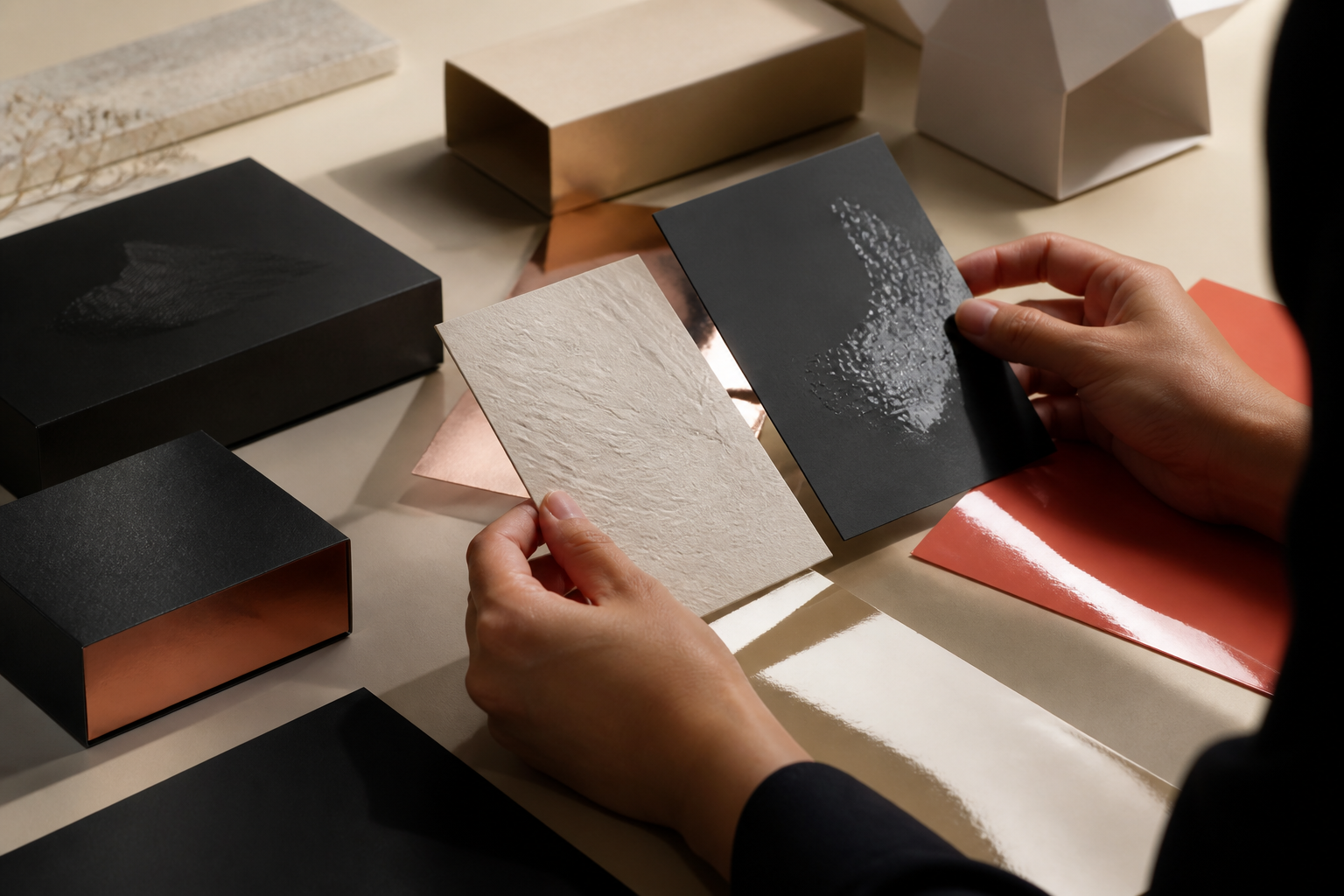
Sample the finish on the intended stock and structure rather than judging from a screen.

-
Matte
Effect: A low-reflection surface with a quiet, soft visual character. Limitation: Stock, coating and fold lines must be sampled for scuffing or cracking.
-
Gloss
Effect: A reflective finish that intensifies colour and contrast. Limitation: The coating must remain compatible with inks, folds and later adhesive.
-
Soft-touch
Effect: A velvety coating that adds tactile drag and warmth. Limitation: Scuff resistance and colour shift must be sampled.
-
Foil
Effect: A metallic accent with crisp directional reflection. Limitation: Fine details and folds need sufficient tolerance.
-
Spot UV
Effect: Selective gloss creates contrast against a quieter base. Limitation: Registration can vary across small or moving details.
-
Emboss
Effect: Raised relief gives a mark or pattern physical presence. Limitation: Depth depends on board, tooling and reverse-side impact.
-
Deboss
Effect: A recessed impression adds shadow and tactile definition. Limitation: Heavy pressure can distort nearby print or structure.
-
Uncoated / natural surface
Effect: Visible fibre and low sheen create a direct material character. Limitation: Ink density, rub resistance and colour consistency depend on the grade.
Sample before committing
Finish results depend on stock, coating, ink, fold geometry, tooling, registration and handling. Request physical samples and confirm production tolerances with the intended supplier before approval.
A practical finish review
Choose a finish for its job in the full packaging system.
-
01
Define the visual or tactile role
Decide what the finish should emphasise and what can remain quiet.
-
02
Shortlist compatible treatments
Check material, print, folds, adhesives and structure before narrowing the list.
-
03
Review physical samples
Compare colour, reflection, touch, scuffing, cracking and registration in realistic light.
-
04
Validate production consistency
Confirm tolerances on the intended artwork, stock, tooling and run conditions.
Connect finishes to premium perception
Review the full system before adding another surface treatment.